


Geogrid for Asphalt to Mitigate Reflective Cracking
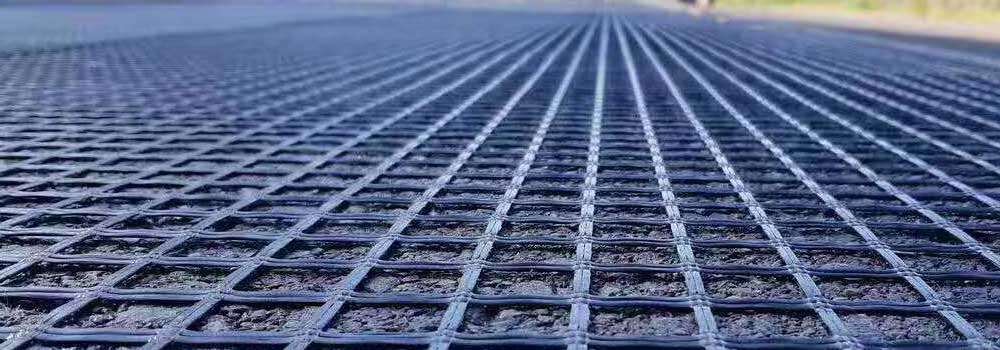
Preventing reflective cracking with geogrid for asphalt is one of the earliest applications of geosynthetics in asphalt roads. Reflective cracks often appear in new asphalt overlaid on existing asphalt that has already cracked. Reflective cracking can occur due to deflection or shear stress caused by repeated vehicle loads. Extreme temperature changes can also cause it.

The figure above shows a crack caused by lateral movement, which then leads to deflection and shear in the asphalt overlay directly beneath the vehicle load. The stress induced in the material by this movement causes reflective cracking in the new asphalt, making it vulnerable to moisture, which eventually leads to system failure.
Geosynthetics have been widely used to mitigate reflective cracking through a combination of functions, including reinforcement, stiffening and separation. By placing a geosynthetic as a tensile element beneath the new asphalt, strain in the asphalt can be limited, preventing cracks.
Geosynthetics act as reinforcement in the interlayer between new and old asphalt. The figure above explains how the tensile strength of a geosynthetic can stop reflective cracking. In 2002, Montestruque conducted laboratory tests on reinforced and unreinforced asphalt layers to analyse the effectiveness of geosynthetics.

Geogrid and non-woven were used as reinforcement. The results showed that geogrid performed better than non-woven and no reinforcement. More recently, in 2016, Correia and Zornberg reported that geosynthetics not only prevent reflective cracking but also increase the structural capacity of a road structure.
Other Articles
Advantages of HDPE Geomembrane Ponds vs Plastic Tarpaulin
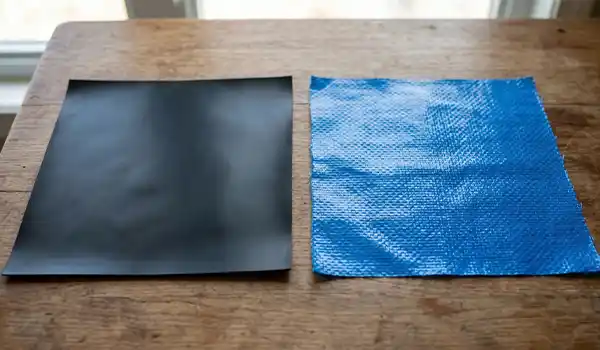
Hello, pond farmers and aquaculture entrepreneurs! If you are planning to build a new pond or renovate an existing one, you have probably found yourself torn between two options: HDPE Geomembrane or Plastic Tarpaulin. At first glance, the two look similar because both line the ground to stop water from seeping away. But when it […]