


Modern, Efficient Shrimp Pond Design
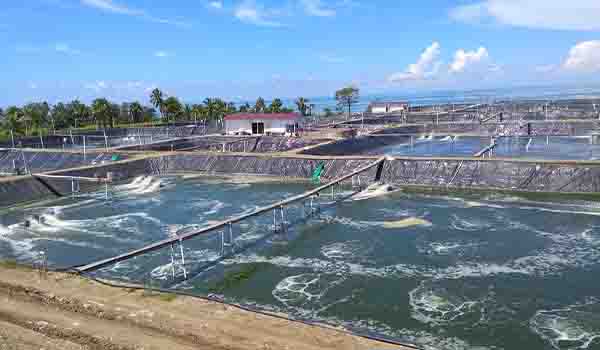
Hello, Petra Friends! Are you planning to invest in aquaculture or want to upgrade an existing farming site? If so, you have come to the right article.
We all know that shrimp farming, especially Vannamei, is a “High Risk, High Return” business. One of the biggest factors separating farmers who repeatedly achieve successful partial harvests from those who often fail is the fundamental starting point: their Shrimp Pond Design.
Design is not merely about excavating soil and filling it with water. In this modern era, pond design involves environmental engineering so shrimp are comfortable, waste is managed, and operations become efficient. Let us thoroughly examine how to design the ideal shrimp pond for you!
Why Is Design Crucial?
Before discussing technical details, you need to understand the right mindset. Many beginner farmers hurry to stock fry without considering construction. The result? Water quality is difficult to control, sludge accumulates everywhere, and diseases spread easily.
A good modern shrimp pond design has these main objectives:
- Efficient Water Circulation: Ensures dissolved oxygen is evenly distributed.
- Waste Management: Makes it easier to remove shrimp waste and uneaten feed.
- Biosecurity: Prevents pests and diseases from entering from outside.
Treat these design and construction costs as long-term insurance for your business.
Choosing the Ideal Pond Shape
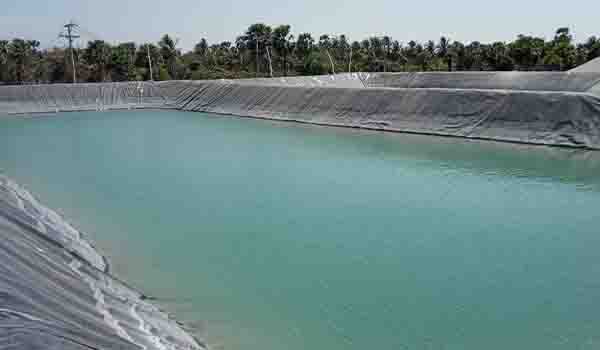
Square or round? Both shapes have advantages, but modern intensive farming is shifting toward square ponds with rounded corners or fully circular ponds.
- Problems with Dead Spots
If you use a square pond with sharp 90-degree corners, circulation from paddlewheels often fails to reach the corners. This is where “dead zones” form. Waste settles, decomposes, produces ammonia, and becomes a breeding ground for pathogenic bacteria.
- Advantages of Rounded Corners
Curving the pond corners makes paddlewheel-driven water circulation more hydrodynamic. The current can rotate fully, carrying waste toward the center for removal. This greatly assists the Central Drain.
Main System: Central Drain
If the human heart pumps blood, the “heart” of your pond-bottom cleanliness is the Central Drain , or central discharge outlet.
In intensive and super-intensive shrimp pond designs, the pond bottom must not be flat. You must design it as an inverted cone with a specific slope toward the center.
- Function: Uses gravity and centripetal currents from paddlewheels to collect sludge, including uneaten feed, shrimp waste, and dead plankton, precisely at the center of the pond.
- Mechanism: A discharge pipe is installed at the lowest point in the center of the pond and connected to a control box outside the pond.
With this system, you can siphon sludge every day very easily without disturbing the shrimp. Remember, a clean pond bottom is the key to healthy shrimp!
Lining Material: Why HDPE Geomembrane?
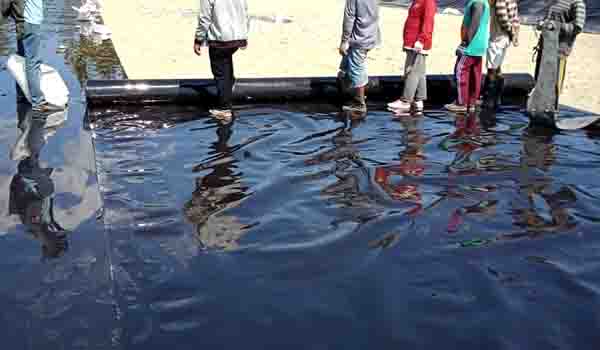
Using HDPE plastic (High Density Polyethylene) or concrete is now the industry standard.
- High Durability and Long Service Life:
HDPE geomembrane resists UV radiation, chemicals, and extreme weather. The material is generally durable and can even last 10 years or more with proper maintenance, making it an economical long-term investment. - Disease Isolation:
Soil often hosts vibrio bacteria or viruses. Covering it with HDPE breaks that cycle. - Easier Harvesting:
Cleaning the pond after harvest is much faster than cleaning an earthen pond, which needs weeks of drying. - Preventing Water Leakage and Maintaining Water Quality:
HDPE is impermeable, preventing pond water from seeping into the underlying soil and vice versa, which stops poor-quality groundwater from entering the pond. This keeps water volume and salinity more stable.
Suitable HDPE Geomembrane Thickness
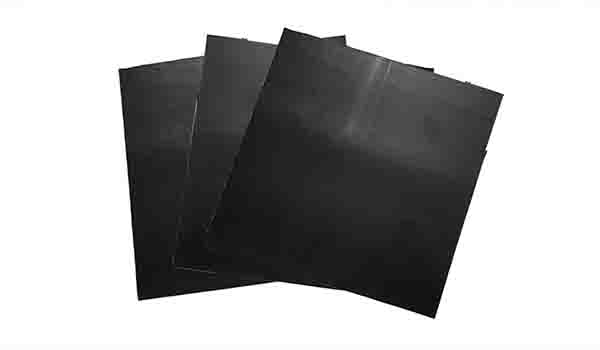
HDPE Geomembrane thickness ranges from 0.3 to 3 mm. However, the common thicknesses on the market are generally 0.5 to 2 mm. Aquaculture ponds can use 0.5 to 1 mm. For shrimp ponds, the minimum required thickness is at least 0.75 mm. HDPE Geomembrane service life generally ranges from 5 to 10 years.
How to Install HDPE Geomembrane in an Aquaculture Pond
- Geomembrane can be installed in a humid environment. However, excessively humid conditions and direct immersion of the geomembrane in water during installation must be avoided.
- Geomembrane should not be welded after it becomes wet.
- Do not drag geomembrane during transport, to prevent it from tearing or being punctured by sharp objects.
- The product must be stored in a cool, dry place. Do not expose it to rain or direct sunlight.
Pond Site Layout
Do not use your entire site only for grow-out ponds, or production ponds. This is a fatal beginner mistake. A sustainable shrimp pond design must divide the land in the right ratio. Ideally, the land ratio is 60:40 or 50:50.
- 50-60% for Production Ponds, where shrimp live.
- 40-50% for Reservoir and Wastewater Treatment Ponds.
- Reservoir Ponds
You must not channel seawater or river water directly into shrimp ponds. That water must first be settled and sterilized in a reservoir pond to kill pathogens and stabilize water parameters.
- Wastewater Treatment Plant (WWTP)
This is very important and is now a mandatory permit requirement. Discharge water from shrimp ponds contains high nutrient levels that can damage the surrounding environment if released directly. Design discharge channels leading to sedimentation, oxygenation, and bio-indicator ponds, usually stocked with tilapia, before the water is released into nature.
Aeration and Electrical Systems
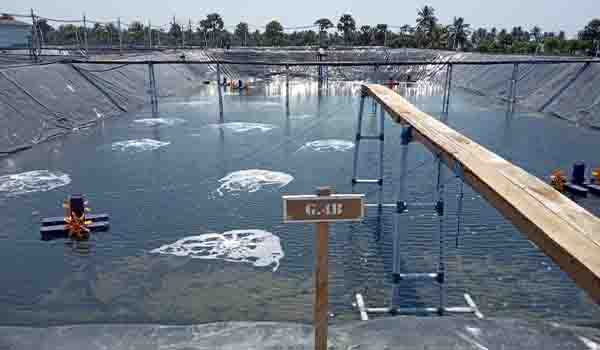
Pond design is not only about civil works but also mechanical and electrical systems. You must calculate oxygen requirements. Paddlewheel placement must be designed to:
- Produce sufficient dissolved oxygen (DO) (>4 ppm).
- Create currents that guide waste toward the Central Drain.
Make sure electrical wiring is safe, neatly arranged, and away from corrosive saltwater spray. Use protected control panels that are easily accessible to your pond technicians.
Biosecurity: The Line of Defense
The pond’s physical design must support Biosecurity. What do you need to prepare?
- Perimeter Fence:
Prevents wild animals, such as monitor lizards, dogs, and wild crabs, from entering and carrying White Spot (WSSV) disease. - Bird Scaring Device:
Birds often eat sick shrimp in one pond and drop them in another, spreading disease. Use lines strung above the ponds to deter birds. - Foot/Hand Wash Basins:
Design the pond-area entrance with a footbath containing disinfectant.
Conclusion: A Smart Investment
Building a pond with the right design requires somewhat greater initial capital than simply digging one. However, when you consider operational efficiency, lower mass-mortality risk, and long-term land sustainability, the right design is actually far more economical.
Need a Consultation for Your Requirements?
Are you ready to build your dream pond? If you need quality pond equipment or further consultation about technical pond requirements, we are ready to be your aquaculture success partner!
Feel free to consult us about your geosynthetic-material requirements. We supply a wide range of high-quality geosynthetics ready for delivery throughout Indonesia. Let us discuss your project needs today!
View Our Catalog: Click here
Chat on WhatsApp Now: Click here
Remember Geosynthetics, Remember Petra!
Other Articles

Geotube and Geobag for Coastal Erosion Protection
Coastal areas are at risk of erosion (abrasion) that can wear away the shoreline, and geotube coastal erosion protection is one way to address it. To deal with erosion caused by sea waves, a structure is needed to minimise their impact. Breakwater structures vary widely and are similar in form to dikes and retaining walls. […]

How to Calculate Geomembrane Quantity for a Pond
Geomembrane is a plastic liner, often called HDPE tarpaulin, commonly used to line aquaculture ponds, water storage ponds, artificial lakes, landfill projects, biogas covers and more. Before you calculate geomembrane quantity, note that it comes in several thicknesses: 0.3 mm, 0.5 mm, 0.75 mm, 1 mm, 1.5 mm and 2 mm. Let’s take a shrimp […]