What Is Geomembrane? Types and Uses


What is geomembrane? Geomembrane is one of several types of geosynthetic material widely used in geotechnical construction in Indonesia. It is waterproof (impermeable), so it can be used as a waterproof liner for embung (small retention reservoirs), wastewater ponds and landfills.
Geomembranes are divided into several types based on their base material, such as HDPE (High Density Polyethylene), LDPE (Low Density Polyethylene) and PVC (Polyvinyl Chloride) geomembrane. HDPE is the type most widely used in Indonesia.
HDPE Geomembrane
HDPE geomembrane (High Density Polyethylene) is the material most often found on the Indonesian market, with thicknesses from 0.5 mm to 2 mm; some suppliers also offer thicker sheets to suit customer needs.

HDPE geomembrane has several advantages, including corrosion resistance, heat resistance up to 97 degrees Celsius, resistance to sunlight and a service life of up to 15 years.
When used as a pond liner, this type can increase production and efficiency because of its long service life of up to 15 years, possibly more.
PVC Geomembrane
PVC geomembrane is made from polyvinyl chloride, with thicknesses from 0.1 mm to 2 mm, and is more flexible than HDPE.
In general it has the same characteristics as HDPE: high impermeability and resistance to high temperatures, chemicals and UV. This type can also be chosen as a liner for wastewater ponds, landfills and artificial lakes, depending on requirements.
LDPE Geomembrane
This type of geomembrane is more flexible than HDPE, which makes it easier to install on many kinds of surfaces. It is made from ethylene monomer in a high-pressure process through free-radical polymerization.
On site, this material is mostly used as a cover for open storage to protect materials in construction areas.
Its characteristics are roughly the same as HDPE: LDPE geomembrane is also resistant to high temperatures and highly impermeable, but in terms of strength it has a drawback, as it tears more easily than HDPE.
When used as a pond liner, this type can increase production and efficiency because of its long service life of up to 15 years, possibly more.
Other Articles

What Is a Geobag? Uses and Installation
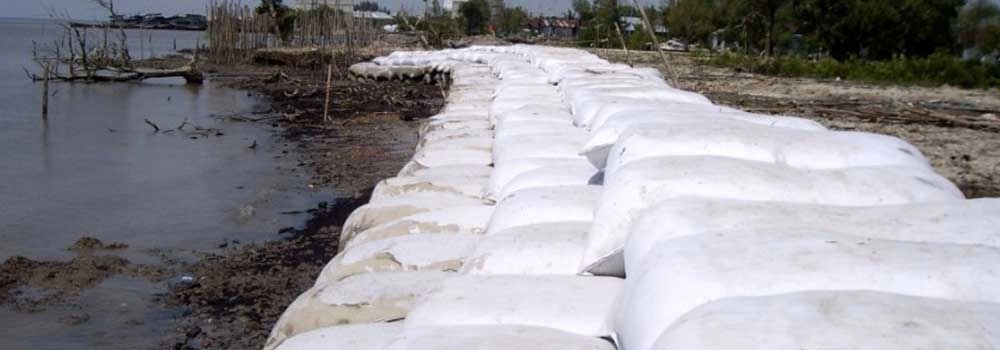
What is a geobag? A geobag is a bag made from Non-Woven Geotextile or woven geotextile that is sewn and then filled with sand or soil. Geobags are often seen along coastlines, where they are used to protect against coastal erosion. One effect of coastal erosion is the shrinking width of beaches, which narrows the […]
Geobag Functions and Benefits for Erosion Control
Have you seen large bags neatly arranged along a riverbank or coastline? This geosynthetic product is known as a geobag. Today, geobag is one of the most popular and efficient solutions in civil engineering construction and environmental management, particularly for controlling riverbank erosion and preventing coastal erosion.